"As far as I know, this is the most comprehensive and most practical description of BrOSR play in existence. It's surprising how much you really have to explain to get the idea across. Well done!!" -Jeffro Johnson
By Boldvay
The way D&D is played today, through the influence of newer editions of the game (i.e. 2nd ed through 5th ed) has caused the game to be played very differently than it was played at its inception in the 1970’s. D&D is the first roleplaying game, there was no RPG community when it came out. The community that was first exposed to D&D was the wargaming community. Gary Gygax and Dave Arneson and their respective crews in MN and WI were wargamers, they wrote and designed wargames, played miniature wargames, had sand tables in their basements, and most importantly read wargaming rules. They were cut from that cloth of Avalon Hill chit wargamers who obsessively played games like Gettysburgh and Tactics. Wargaming and running wargaming campaigns was something that was very familiar to them, and when the were designing/ first experimenting with their respective proto D&D campaigns Blackmoor and Greyhawk, they were able to see the wargaming connections to rpg’s and play them like multi-faceted, living worlds that existed in real time. The movement and placement of important characters determined what happened in the game. Time was recorded and well-documented. PCs took the initiative and told the DM what they wanted to do in game, perhaps hire and outfit some troops, perhaps search for a defensible place where a future stronghold could be built, maybe an army of orcs came about through a random encounter roll, and now that threat is on the map and must be dealt with. There was a lot less of a campaign based around one group of PCs who traveled together from session to session, with each session ending with time freezing, the world left in suspended animation until the PCs meet again at the next session. Play is resumed exactly where the last session left off, with the PCs in the same place, same amount of HPs, and same spells remaining. 99% of modern D&D games do this without even realizing that there is another way to play. There are clues, there is evidence of the older way to play, it can be found in the AD&D 1e DMG. Many people consider this a ponderous, archaic book filled with a bunch of rules that must be discarded for the game to work. But the clues are easy to find, they are very often the bold faced passages in the text. We will look at the wisdom in some of these bold face passages to see that the means to play D&D like a wargame is right there baked into 1e which in my and many others opinion is the most comprehensive, fully functional version of the game that delivers a living world populated with as many people, places, and adventure ideas as the group can collectively produce. I will go over the following bullet points to provide a concise but thorough look at how to structure your game like a wargame, as Gygax puts it, a “milieu” of recurring characters living in real time with their own self-determined motivations, and not a single DM determined plot that one group of main characters follow at the expense of all other aspects of the game world.
1:1 Time- Strict Time Records- Probably the foundation principle these types of campaigns are based around is maintaining 1:1 time, meaning that for every day in real life that passes, one day passes in game. It is important to maintain a calendar that tracks the location and movement of important forces in the game. It clearly states in all caps on pg. 37 of the DMG “YOU CANNOT HAVE A MEANINGFUL CAMPAIGN IF STRICT TIME RECORDS ARE NOT KEPT.” During a game session, the session begins on the date and month it is in real life, (It is possible to use fantasy names for months and days of the week, but I find it avoids confusion to just use real names) and progresses through as much time as the session warrants. For example, suppose a session begins with a party staying at an inn in a town, and they decide to travel for 1 week to get to a dungeon location they heard a rumor about. Then they spend 3 days delving the dungeon, coming out to camp and rest, and going back inside to adventure for that time. Then they travel the 1 week back to town and tell the tales of their adventure and spend some of the treasure they found. 2 weeks of travel and 3 days of adventuring totals to 17 days spent on that session. If the session started on Jan. 1, by the end of the session it would be Jan. 17. Let’s say the group meets every 2 weeks to play. When they go to meet for their Jan. 14 game session, the PCs are still accounted for. We already know what they did on Jan. 14-17, they cannot be 2 places at once or do 2 things at once. They cannot participate in a new game session on Jan. 14 as they are already on an adventure that will not end until Jan. 17. The group can meet and play on Jan. 14, but those PCs from the last session are not available, they are still on their prior adventure. In the next section we will see how that aspect of play- where the players are available, but their PCs are not is handled, but to end this section we must discuss the thing that makes a 1:1 time game session feel a little different than a “freeze time” game session. In 1:1 time you must plan ahead during the game session and allow for enough time for the PCs to travel back to a safe area before the session ends. It doesn’t usually require too much time, just enough to calculate length and time of travel, and saving time at the end of the session in case a random encounter or 2 needs to be played out before the PCs can get to a safe area. PCs need to spend their downtime, their non-session time in a safe area. Should that not happen and they opt or are forced to spend downtime not in a safe area, they will incur all the necessary random encounter rolls, whether they be dungeon or wilderness for the entire span of downtime, making things very difficult for them if not outright unsurviveable. Once the group gets used to spending the end of a session getting to a safe area there’s not much else to adjust to. So we just looked at an example where the PCs will not be available for a game session because they are still in time spent last session. What do you do in this situation?
Multiple PCs per Player with Training Time Rules- This is how players end up with several characters during this type of campaign. If a player’s initial PC is unavailable due to 1:1 time, they simply make up a second character to be run for that session, then that new PC is available for future sessions when the “main” PC is unavailable. Actually this process can do a lot to squash the concept of “main” PCs and “side” PCs. Each group will develop this as they see fit, some may have these multiple parties spread out across the map so they don’t interact that much or maybe they aren’t even aware of each other. Other groups might develop these PCs close together so they can mix and match party combinations, or perhaps have one party go off on an adventure that somehow aids or assists the other party. There are lots of ways to do the “milieu” of stables of PCs available to players as they develop them in real time in the campaign. In addition to 1:1 time having an effect on PC availability, applying the training rules also can have an effect, making some PCs unavailable during the time they must spend training to get to the next level. Yes, training rules are a thing in AD&D, you don’t magically pop up to the next level as soon as you have enough xp a la a video game. You have to find a trainer, pay him, and spend time, usually 1-2 weeks training your skills before you get the benefits of the next level. PCs unavailable due to training time are treated the same way as other PCs unavailable due to strict time records.
Downtime Activity- Downtime can really change the way you look at a campaign. Because game sessions are tracked in real time, and all sessions end with the PCs in a safe area this allows lots of opportunity to do things during downtime that aids that party and furthers the campaign. Supplies and equipment can be purchased during downtime, as well as rest, recovery, and healing. Downtime really affects things like spell recovery and healing. Games set in freeze time are constantly at issue with PCs still wounded, or still spell depleted from last session. In 1:1 time, sessions always begin with PCs at full health and spells, giving them their full resources at the beginning of each session. This way you avoid the slog PCs sometimes go through of constantly trying to find time in session to rememorize spells or heal. Spellcasters can pull their weight more often, and aren’t frequently in need of rest when the remaining party wants to continue. The other thing downtime allows for is, for lack of a better term, all the downtime activities that are available in the DMG. Scribing scrolls, crafting potions, and researching new spells can all occur much more readily in 1:1 time. In a freeze time game a wizard would have to remove himself from play to do any of that and is usually not considered at all. These actions all have well spelled out timeframes to complete, and with downtime you can calculate what can get done in between sessions, and what things will take too long to get done before the next session. Other things that work really well in downtime, but barely at all in freeze time are things like the spying and assassination rules. Both have clear time amounts it takes to complete, and in a freeze time game again, an assassin who wanted to do these activities would have to miss out on sessions. There are lots of other things PCs can do in downtime to enhance the game. Time can be spent listening for rumors, they can look for and attempt to hire mercenaries, henchmen, and hirelings, and they can use the rules for construction, perhaps building their own manor house, or a wooden palisade around their home village for defense. There really is a whole world of downtime opportunities governed by well-spelled out procedures and player creativity that add a depth of play that a freeze time campaign cannot provide.
Hirelings/Henchmen/Mercenaries- Something modern D&D has really moved away from is large parties that make use of the rules for hiring mercenaries, henchmen, and the rules for attracting henchmen. If you read the old AD&D 1e modules they will frequently say they are written for parties of 9 PCs plus any henchmen or hirelings they may have with them. This can make for quite large parties, 20+ member parties were common back in the day. Gaming groups tended to be larger than nowadays where 3-5 players is the norm. 7-8 players each running a PC, and then add in some henchmen and mercenaries and parties were quite large, and this allowed them a degree of resiliency, as having that many targets to absorb damage made for a longer time before a party was too weak to go on. It also allows for tactics that have gone unexplored for years. A line of mercenaries with spears can be ordered to set spears to receive a charge, perhaps done in conjunction with a spellcaster casting a spell to protect him. PCs can order those units into and out of combat, making attacks with them when appropriate, but pulling them back when the threat is too great or the losses are getting too numerous. Henchmen can be advertised for and acquired during downtime, but then as the henchmen advances, and possibly as PCs are killed, henchmen can be turned into PCs, allowing them access to characters that don’t have to start at level 1. As the game moved away from this type of play, parties began to take the shape of smaller, elite groups of super powerful characters that could handle the same challenges of the large party, but done less in a “it takes a village” mentality, and more of a “crack team of superheroes who are very hard to kill” style of play. Couple this with the fact that 5e D&D starts characters out rather powerful and very difficult to kill, and you get a very different feel from the way the game is played currently.
Random Tables and Reaction Rolls- These are the bread and butter of AD&D and the other systems that support 1:1 time play. You can literally run a session with no prep using only the random tables and reaction rolls. AD&D and other quality systems will have thorough tables for calculating overland movement, and for random encounters based on terrain type. The party selects a course of travel, the terrain type is determined and random encounter rolls are made. The entries in the Monster Manual are varied and deeply described, with a high degree of challenge. It is entirely possible for a party to quickly get in over their heads simply from a random encounter. Check out the MM some time, look up say orc for example. Look at the number appearing 30-300! Your party just encountered 240 orcs! That moves the needle quite a bit on ramping up the excitement and danger of the game. But does that mean it's just a total wipe, a TPK? No, there’s more depth than that. First, the encounter rules have a method for determining starting distance from the 2 groups. Maybe the orcs are far enough away that the party can run, or hide. There are also reaction rolls, so perhaps the encounter plays out with a favorable reaction roll, and the orcs are too busy heading somewhere else, or don’t care enough to interact with the party because they don’t see them as a threat. One example of this that has happened to our group is the emergence of a “big bad” that came about completely through random encounter and reaction rolls. The players were traveling to a dungeon and on the way I rolled a 20 on d100, the only roll that would cause a dragon encounter. I rolled a red dragon, I rolled it was in flight, and things looked rather grim for the party, one breath could end them all. I used reaction rolls, figuring the dragon in flight may not notice the party, and might not even care to interact should he notice them. I made one roll to see if they were noticed and one to see if he cared, and both were favorable results. I had the dragon loop around as id coming around towards the party, then it harmlessly flew out of view. The very next session, the party was again traveling to that dungeon location, and again the random encounter roll that came up was serendipitously another 20! I figured there couldn’t be 2 dragons living in this same area, so it must be the same dragon. Another 2 reaction rolls, this time unfavorably, and the dragon again loops around towards the party, only this time I had him breath on a randomly determined ⅓ portion of the party (they had a large party with mercenaries, too long for the breath to get everyone). He breathed, took out a bunch of mercs and a henchman, then I made a second reaction roll, this time favorable. So I had the dragon yell out “Ha Ha”, and fly away, asserting his dominance and position as a top level predator in this area. It also created an organically derived nemesis for the party, a new threat to be cautious of and to hopefully someday defeat. I was then able to find a player who wanted to run the dragon as a patron, breathing even more life into this new nemesis. More on patrons later.
Emergent Play- Emergent play is pretty easy to describe. The above example is an excellent example of emergent play. It is the development of the “story” of the campaign through player agency. The modern conception of RPGs is that the DM comes up with a storyline ahead of the game session, and presents the players with situations and choices that move the game, and therefore the story along. It is up to the DM as to how “railroady” this process will be. Will the players make choices that take them away from the predetermined story threads? Will the DM allow that to occur, or just railroad them back to his preconceived plot points. Emergent play is the opposite of this. The DM has no pre-written plot, player choice coupled with random rolls determines the story. This causes things to develop organically, and players feel they are a part of the process of breathing life to the campaign, their ideas and choices are glorified and accentuated, not the DMs. The DM has fun because he has much less prep, and is not shepherding the players through his story, but enjoying the process of discovering the unknown story collectively with the players. The railroad DM writes the story first and forces/ encourages the players through it, The emergent play DM plays the game with his players and the story is the results of play, not the driver of play. There are so many details in the random encounter tables of AD&D to develop rich, emergent play. Did you know that for each encounter there is a 1 in 20 chance of there being a stronghold nearby? And then should a stronghold be present you roll to see if it is inhabited by troops with leadership, a random monster, or empty? All three situations lead to interesting and diverse emergent play situations. The random monster becomes a new lair to explore and drain of treasure, a stronghold of troops and leadership such as a crew of bandits can lead to the building and battling of armies in mass combat, and an empty stronghold can be rebuilt and reinforced into the party’s own stronghold. One caveat to the concept of “no prep” in conjunction with emergent play- Leaving everything to be rolled out and read over in real time can create long periods of stagnation during game sessions. One of 2 techniques can be practiced to avoid this. One is to practice rolling out encounters so that it can be done relatively quickly. Read the monster manual to be aware of monster stats and abilities so they are more familiar. Getting fast at the process is one way to avoid slow game sessions. The other way is to have some encounters pre-rolled, there are several ways to do this. Have a list of pre-rolled encounters for your most common terrain types. Have the number appearing, distance away, and all the leadership personnel pre-rolled, are they in lair or not, and their treasure based on treasure type, then either grab them in the order you rolled them throughout the course of the session or use your short list of random encounters as its own random table for determining encounters.
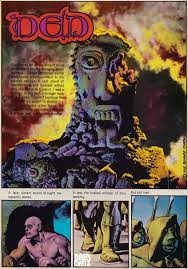
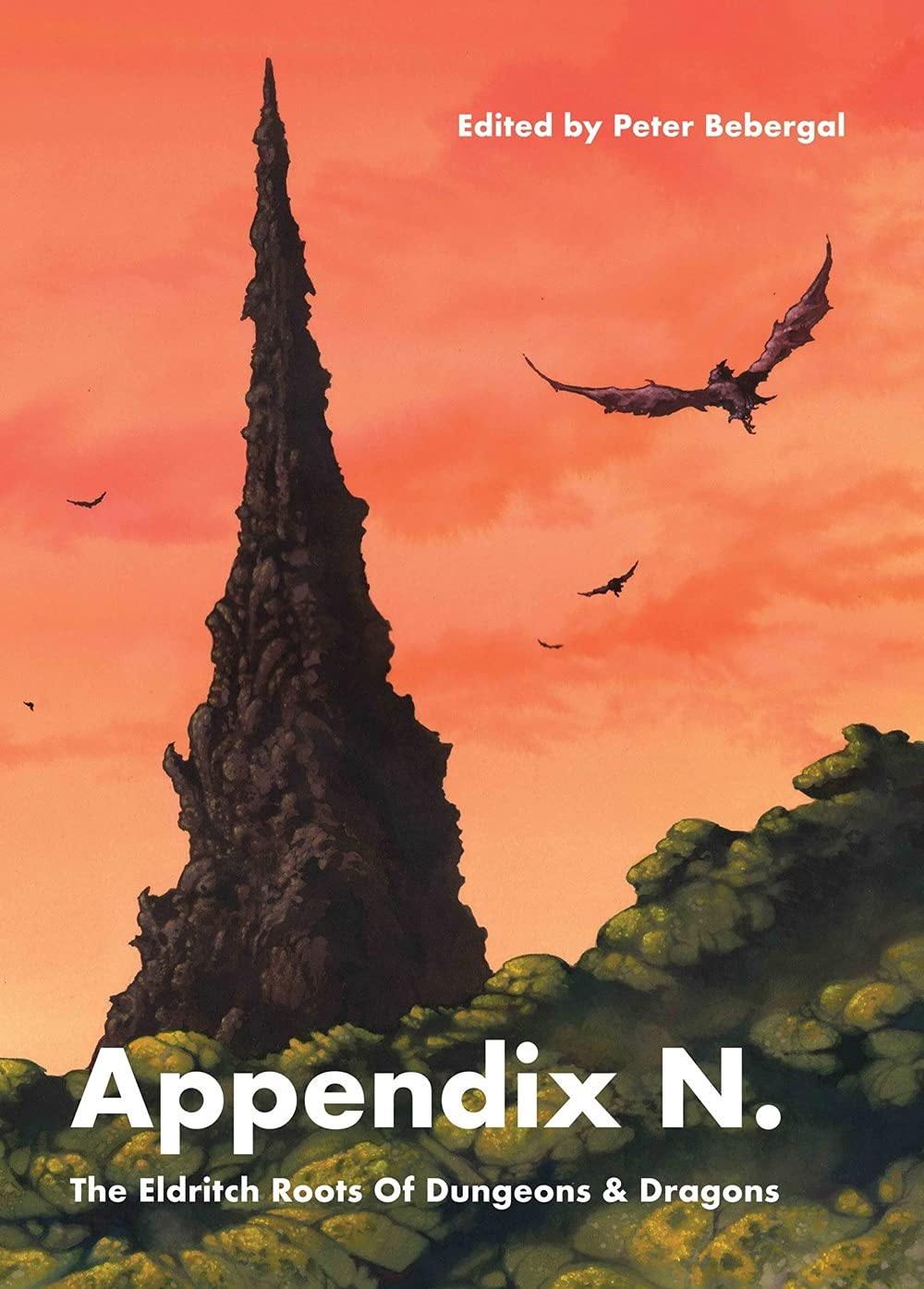
Appendix N- Appendix N is an appendix in the DMG that lists the authors, books, and stories that influenced the early development of the game. These authors and stories are the raw materials that formed many of the governing rules of the game, and the inspiration for many of the monsters, items, abilities, and spells. The very nature of how magic works is based on one author, Jack Vance and his Dying Earth series. In it, Vance spells out how magic works, which was then directly applied to how the D&D magic system works. Vancian magic, and D&D magic work the same- all spells work the same regardless of who casts it, there are a certain number and type of spells in the world, spells must be memorized until cast, upon which they are forgotten until rememorized, and more powerful wizards can memorize more spells. All of that comes directly from Jack Vance. This is actually referenced in the DMG on pg. 40 when talking about the AD&D magic system it states “for background reading direct campaign participants to Vance’s Eyes of the Overworld and The Dying Earth…”. Want to know about the D&D origins of trolls, dwarves, or paladins? Read Poul Anderson's Three Hearts, Three Lions. Cosmic threats from other planes? Read H.P.Lovecraft. The alignment system of chaos vs law? That comes from Michael Moorcock’s Elric series, as well as some more Poul Anderson influence. Want to read the epic tale of a young warrior's rise from humble thief to an empire ruling king? Read Robert E. Howerd’s Conan stories. When you read the Appendix N list, you will notice that while Tolkein is on the list, he is in no way uplifted or spoken of as a key influence. In fact, here's one of many Gygax quotes on Tolkein as related to D&D- "Take several of Tolkien’s heroic figures for example. Would a participant in a fantasy game more readily identify with Bard of Dale? Aragorn? Frodo Baggins? or would he rather relate to Conan, Fafhrd, the Grey Mouser, or Elric of Melnibone? The answer seems all too obvious." Lots of modern gamers make the incorrect assumption that the main influence on D&D is Tolkein, (or even more incorrectly Ed Greenwood’s Forgotten Realms) there are obvious influences, but Tolkein epic high fantasy is much less the flavor of early D&D. Instead the early games were much more pulpy, sword and sorcery stories of hardscrabble individuals living in a wild world of strangeness, extracting treasure from the dark and hidden places. Early D&D is so much less about epic battles of the forces of good vs evil, kings and queens battling world altering evil forces, and so much more about weird science/fantasy, quirky creatures, strange lands, and magic devices. Any player or DM worth their salt should be consuming a steady diet of Appendix N authors, it is essential to keep fresh in the mind the real origins of D&D, for informing the composition of the game world, but also for a resource of great ideas and inspiration to draw from.
Patrons- PCs play in game sessions, start at 1st level and advance by forming parties and adventuring and exploring in the game world. This is universally understood, the players pay PCs and the DM creates the world and all the NPCs for the PCs to interact with. How to enhance this? Use patrons in your game. Instead of you, the DM, developing powerful NPCs to to populate your world with and then playing the roles of those NPCs as they interact with the PCs, give the roles of those powerful NPCs to a friend, let them develop the details, their lairs or strongholds, their allies and henchmen, their items and treasure, and their motivation, let them breathe life into these characters and let their decisions govern how the NPC behaves. This is patron play. Patrons take on the role of things like kings, wizards, powerful monsters, or generals, and the actions of these powerful forces create story opportunities to be played out. Some patrons are helpful to PCs providing them resources or a safe place to stay during downtime. Some are neutral, not interested or able to be helpful or harmful, but their actions in the world still create opportunities and add depth to the world. And of course, some patrons are brought on specifically to be the “big bad”, or a “big bad”, they are there to play an opposing force against the PCs goals. Sometimes PCs and patrons work directly together, a good patron may offer a quest that helps him accomplish one of his goals while building relationships with the PCs and pulling them deeper into the interplay of patrons and their interactions. Ideally you want a variety of patrons in your game. One way to start is with 1 good patron that aids and helps the PCs either directly or indirectly, one neutral patron who is unconcerned about helping or harming the PCs but is still doing things in the world that create interaction, conflict, and adventure hooks, and one evil patron to provide conflict and put fear in the PCs. This is more difficult than it sounds. Not everyone is up for running a patron. It’s a bit of an esoteric role, you are doing all of you actions behind the scenes in private with the DM, not playing in sessions, and generally not gaining xp or levels, (though there are some ways for patrons to earn xp) and if they don’t see frequent responses to their actions can feel a little out in left field wondering if they are having an impact. I have had issues myself. I tried to get a few patrons going in my campaign and had some success, but don’t be surprised if things fall apart for a while and you have to adjust. I started with 2 patrons, one LG, and one evil, the LG patron kicked but, developed characters and henchmen, did some solo crawling and hex clearing, made maps of his area and a bunch of other cool stuff. The other patron was into it for a few weeks, then totally flaked and ghosted the campaign. No big deal, I tried to pivot. I asked some players if they were interested in running a patron (preferably neutral) and they agreed to try it out. They each have made some ideas come to life, and have done some planning for their patrons, but a) I don’t want my players to also be pulling the weight of patrons. Having players double up roles and play PCs and patrons is an ok way to supplement patron play, but the main patrons should be non-players to keep better separation. In the last month or so my really solid LG patron has had real life stuff come up and he is no longer able to be active. I was sure to contact him to thank him for all he had done, and let him know I will continue to use everything he developed. He responded with thanks and said should his time change he may return. Patrons can be a great way to increase the depth of your campaign, get more people involved, it gets people involved who maybe couldn’t make regular sessions but still wants to be involved. They are a bit of work to get going, but once in place they pay dividends towards how much campaign development happens without direct DM effort.
AD&D RAW/ ACKS- So what system or systems best facilitate this type of play with 1:1 time, patrons, random tables and emergent play? Well obviously AD&D 1e is the best choice, it’s the original system that attempted to facilitate this type of play. It has everything you need condensed into 3 perfectly presented books. There is nothing you have to develop on your own, the main barrier for entry for 1e is that many people find the book ponderous, poorly ordered, and a prose style that takes some getting used to. 2 points I can make to help those trying to make sense of the DMG. The first design technique to keep in mind is that things appear in the DMG when they first come up through the natural order of the writing. What does that mean? You find the placement of a rule in the book based on where in the order of the writing the rule first needs to be explained. Here’s a great example. Where in the DMG are the rules for multiclassing? In the racial description for dwarf of course! Why the hell is it there? Because when you read the book in order, the first race alphabetically is dwarf. In the description of dwarf it says that all demihumans can multiclass, then gives the rules for doing so. If you had rolled up an elf, then looked in the elf section for rules for multiclassing you will not find them, but someone who read the book consecutively would have read the dwarf description before reading the elf description, and therefore know that the rules found in the dwarf description also apply to other demihuman races. Is this a great way to structure the book? Probably not, but remember, there was no rpg culture back then, there were very few examples of written rpg books and their roots and structure came from the rules writing style of the wargaming community, the community that first embraced rpgs. Early rpg players were familiar with the diy style of wargames produced by small game companies. The rules of these games were much briefer, less clear, required some degree of prior knowledge of how other wargames work, and often lacked clear rules for every situation. Wargamers of the day were just better at intuiting understanding the organizational choices of wargame rules writers. The other thing to know that will greatly assist you in using the AD&D core books is the index. The DMG has an excellent index that references both the DMG and PHB. I use the index all the time, it’s invaluable. Just about every important aspect of the game rules are referenced in the index. The other issue with AD&D is the amount of rules that interact with each other and the sometimes knee jerk reaction a DM has to so many compounding rules is to start cutting things out. This is a huge mistake. You must always try to play the game as Rules As Written (RAW) as possible. It’s only with using all of the rules do they make sense and function correctly. It’s a disservice to the game to immediately excise any rules that seem cumbersome, try every rule, after sessions go back and see what you missed. Refine, read, and practice and you will find AD&D begins to work for you. More modern gamers who were brought up on much more clearly presented, well-edited game books can really get lost in the weeds of AD&D’s organization, length, and language. If those things are turning you off from trying AD&D 1e, the absolute best other choice is Adventurer Conqueror King (ACKS). This is very clearly presented, easy to read and reference, and has all of the necessary rules and tables to run a fully 1:1 style game with no homebrewing. It’s well worth its price, the system is all self-contained in one main book, with supplemental books that add things like mass combat and monster lairs. ACKS is an excellent value, and everything you need to run if you are AD&D averse. Other systems can accommodate this type of play, but not without modifications and additions. One very famous and one of the earliest modern attempts at 1970’s style D&D was the West Marches Campaign, a well-documented campaign with a lot you can find online written about it was run using D&D 3.5. Other systems could be made to work. For me, the choice is clear, I already invested the time acquainting myself with the AD&D DMG, I have a couple of years running it under my belt, and I want to use the system that has the historical connection to the game. That may not be the best choice for everyone, some may find ACKS more accessible to themselves and their players. Read through a few systems, try a few out. My campaign started with Advanced Labyrinth Lord, briefly flirted with ACKS, but then firmly settled on AD&D 1e. You may find something else that works for you, but start with checking out AD&D and ACKS.
Discord- So how do you organize and present all this information in a way that engages players and encourages them to think of the campaign as a living world that exists in real time? Use technology- I am a big believer in using Discord to create your own campaign server. Discord gives you many options that lean into giving your campaign an organized place for presentation and communication. When you create a discord server you choose and name each channel that supports text and images. I use the main General channel for in game sessions. I have a die rolling app on the discord, and rolls are made in the general channel during sessions. I have a channel for rulebooks and character sheets, downtime activity, a channel that tracks xp after each session, a channel where I publish my session reports, and a private channel for each PC and patron. I also have a channel for maps, one for handouts, one for background legends and rumors, and one for patrons to post stuff. Discord also provides voice and video chat, and we play and talk on the chat channel, while typing and rolling dice in the general channel. I also will turn my camera on on the discord and use it in conjunction with minis to show party marching order. I set out the minis that represent each PC and hireling, and the party tells me how they want their marching order, and where their light sources are, and I set up the minis in order and players can refer to the video to see marching order and make changes as combat dictates. I don’t battlemat stuff, I will with more complicated combats put down minis to represent enemies, but we still keep it theater of the mind, we mostly just use it for marching order and to show who’s in melee and who’s not, but it really does a lot to keeping people on the same page and avoiding mistakes. The discord is far and away the online tool that works best. More modern tabletop online programs can't do any of this. Things like Roll20 offer cool battlemats, mood music, and fog of war lighting, but do nothing to accommodate downtime play, patron play, and multiple parties.

As brief as I tried to keep this piece, it still required 9 pages to thoroughly discuss the topic. I’ve had this issue before, telling someone that I know a way to play D&D like a wargame, but with how much there is to say to completely explain my point it is difficult to be concise. I hope readers are able to take the time to fully read and digest this piece, ruminate on it and think if this is the type of campaign for you and your group. These techniques will bring a richness and depth to your campaign, you will find players engaged in the game even when not in session, using the discord to announce downtime activities and plans for upcoming adventures. These techniques are modular too, insert them into your campaign as you see fit, one at a time, two at a time, try the ones most interesting to you first, see what works, but ultimately you will likely find yourself using all of them, working together to provide a deep, meaningful, exciting campaign rich with player derived content. These ideas are far from my own, many years of play from several key campaigns and their players have developed and promoted this style. I recommend the author Jeffro Johnson and his books Appendix N, a literary analysis of the Appendix N authors, and How to Win At D&D, a much more well written and more researched source for how to enact this type of play.
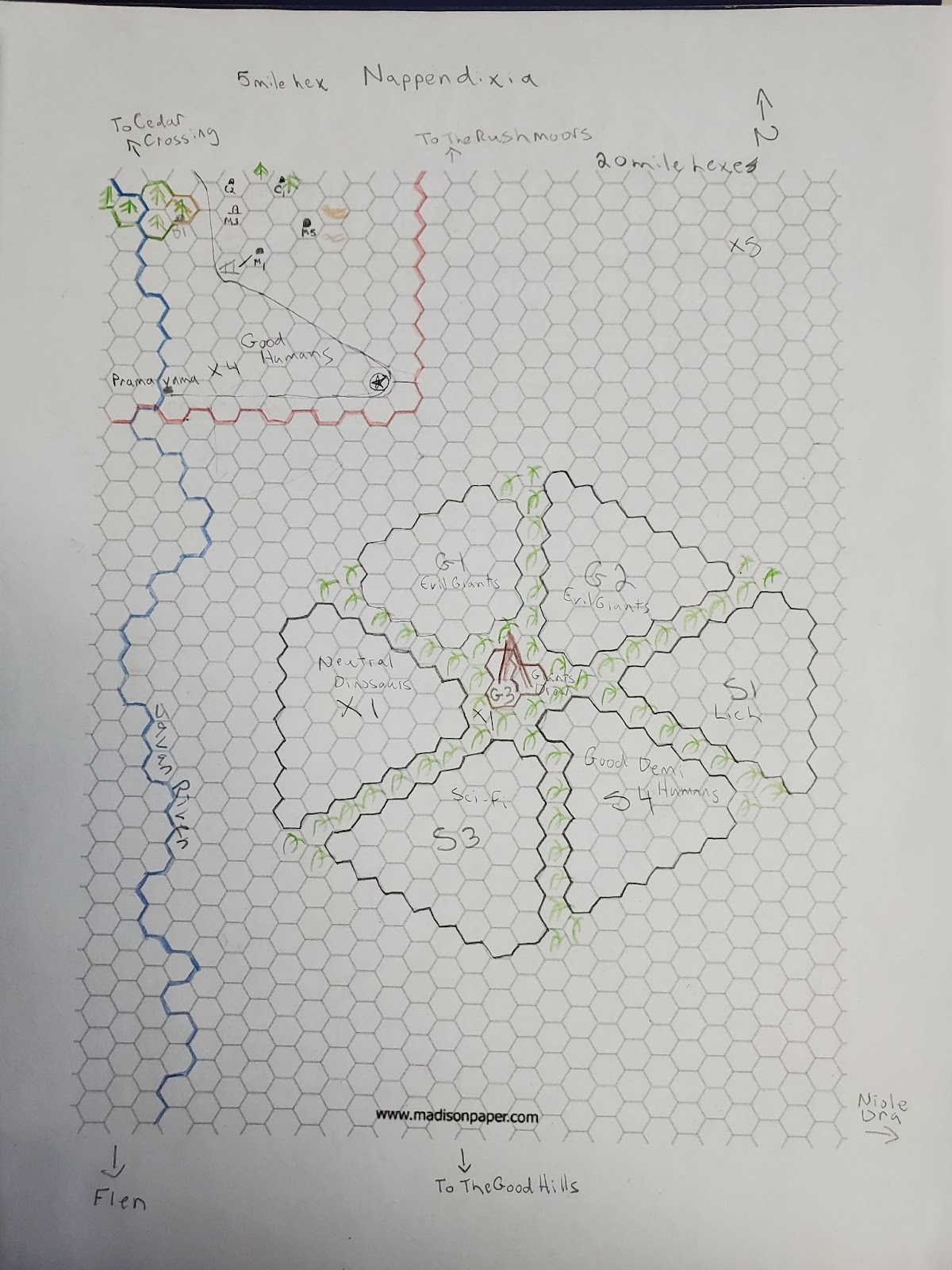
If you have any interest in trying out this type of campaign, my Nappendixia campaign is looking for players
and patrons. We play on Discord, you can read all about the campaign here on the blog.Get in touch here to join the campaign.